
How to Choose the Best Immersive Technology for Your Game Presentation
Basketball courts are no longer just playing surfaces as in-game presentations and fan engagement evolve. They have become canvases for immersive storytelling, sponsorship activations, and dynamic visual effects. Having worked with over 40 professional sports teams at Quince Imaging, we understand the demands of game-day production and the technologies shaping the future of venue experiences. Two solutions have dominated the conversation in recent years: LED basketball courts and projection mapping. While both offer compelling advantages, the right choice depends on your venue’s technical constraints, programming needs, and overall vision for in-game entertainment.
Thiis post will break down the key differences between LED court technology and projection mapping, including real-world insights from the NBA and leading sports venues, to help technical directors and in-game presentation teams make informed decisions.
Projection Mapping for Basketball Courts
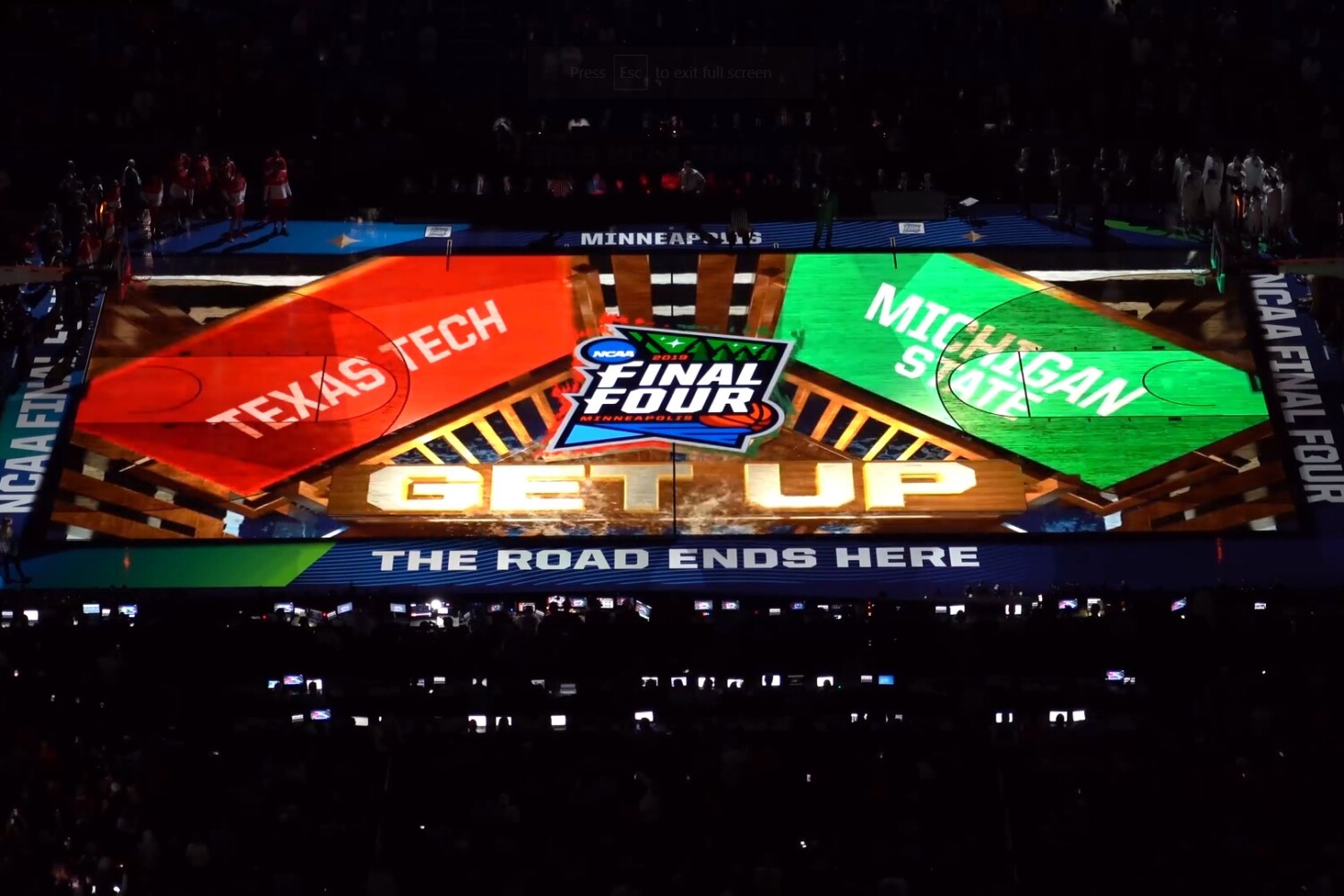
Projection mapping uses high-brightness laser projectors to display animations, branding, and game-specific visuals directly onto the basketball court. With advanced calibration tools and professional media servers, the system aligns content precisely with court lines, ensuring clean, accurate, and cohesive visual effects.
This technology has been used in professional sports since the early 2010s and is now widely adopted across NBA, NHL, NCAA, and international venues. Its popularity comes from its reliability, consistent performance, and ability to integrate into existing arena infrastructure without modifying the court. Today, projection mapping remains one of the most proven and dependable solutions for large-scale, game-day presentation.
Advantages of Projection Mapping
- Seamless Multi-Sport Integration – Projection mapping is ideal for venues that host basketball, ice hockey, volleyball, and more, allowing instant transitions between different sports lines without physical modifications.
- Real-Time Tracking & Interactive Capabilities – Advanced tracking systems enable interactive games, player data visualization, and dynamic in-game enhancements.
- Easy Integration with Existing AV Systems – Projection mapping integrates seamlessly with in-house AV infrastructure, making it a cost-effective and scalable solution.
- Available for Lease or Permanent Installation – Projection mapping systems can be leased for special events or installed permanently for ongoing use.
- Rapid Content Customization – Teams can adjust graphics on the fly, quickly changing game-night presentations.
- Lower Upfront Costs Compared to LED Floors – Projection mapping system costs vary based on technology, with high-end setups running up to $1,000,000 but can be leased for events starting at $50,000+.
- Proven Performance in Pro and College Arenas – Projection mapping has been successfully deployed in NBA and NCAA venues to enhance pre-game hype, player introductions, and sponsorship activations.
- More Availability of Graphic Designers – Projection mapping has a larger pool of proven content creators compared to LED floors, making custom animations and branding easier to develop.
Challenges of Projection Mapping
- Ambient Light Sensitivity – Projection mapping requires controlled lighting conditions for optimal visibility. This can be challenging in areas with high ambient lighting or midday events.
- Shadows and Player Movement – Moving players can cast shadows on the court, which must be considered in content design.
LED Basketball Courts
LED basketball courts use LED panels installed beneath a high-impact sports surface, allowing the floor to display visual content, data, or adjustable court markings. The concept has been explored since the mid-2010s through various demonstrations and pilot installations in training environments and special events.
While still considered an emerging and relatively unproven technology for everyday competitive play, LED court systems continue to be evaluated for potential uses such as multi-sport flexibility, instructional overlays, branded visuals, and enhanced practice environments.
Advantages of LED Courts
- Full Interactivity and Real-Time Data Integration – LED courts can react to player movement, creating interactive training and entertainment experiences.
- Works in Most Lighting Conditions – Unlike projection mapping, LED courts do not require darkness to be visible.
- Multi-Sport Functionality – With digital lines, venues can transition from basketball to volleyball or futsal at the touch of a button.
- High-Impact Sponsorship Opportunities – LED courts create new advertising and sponsorship spaces with real-time branding integration.
- Available for Lease or Permanent Installation – LED courts can be leased for short-term activations or installed permanently.
Challenges of LED Courts
Insights from the 2024 SVG Summit Workshop, where Barney Carleton (NBA, Sr. Director of Broadcast Planning & Strategy) shared firsthand experiences from the NBA All-Star LED floor implementation, highlight several key challenges:
- Extended Setup Time – Initial installation took far longer than expected, which can be a major concern for teams looking for quick turnarounds between games and events.
- Complex Media Integration – LED floor systems require extensive content adjustments and media coordination, adding unforeseen delays.
- Heat and Structural Concerns – The LED flooring system generated heat, requiring venue operators to factor in cooling solutions. Additionally, the heavy racking system needed reinforcement and impacting arena operations.
- Ball Spin and Player Feel – While innovative, the playing surface of LED courts did not fully replicate the bounce and friction of traditional hardwood, raising concerns among athletes and game officials.
- High Cost and Durability Considerations – LED courts represent a significant investment in installation and long-term maintenance, making them more suitable for special events rather than daily gameplay.
- Limited Availability in the U.S. – Few providers offer LED floor technology in the U.S., making procurement and servicing more challenging. The bulky equipment is also difficult to transport. In the future, increased inventory may help lower costs and improve accessibility.
- Limited Pool of Proven Graphic Designers – Unlike projection mapping, which has a robust industry of content creators, the LED floor industry has a much smaller pool of graphic designers with experience in developing compelling, game-ready visuals.
Which Technology is Right for Your Venue?
For in-game presentation and technical directors, the decision between LED courts and projection mapping should be based on several key factors:
For NBA & NCAA Arenas Focused on Game Presentation:
- Projection mapping is best for pre-game hype, halftime shows, and sponsorship activations.
- It is cost-effective and does not alter the traditional court surface.
- Offers immersive fan experiences without impacting gameplay.
For Multi-Sport Venues
- Projection mapping provides a flexible, seamless solution for instantly switching between basketball, hockey, and other sports.
- Avoids the challenges of LED court structural changes and impact on game physics.
- Enables real-time tracking and interactive games for enhanced fan engagement.
For Special Events and Sponsorships
- Both LED courts and projection mapping offer branding potential, but projection mapping provides a more scalable solution with lower costs.
- Quince Imaging specializes in integrating video mapping technologies, allowing teams to explore hybrid solutions tailored to their venue.
- Sponsorship activations are maximized through custom content designed to engage audiences.
The Future of Game-Day Presentations
Hundreds of professional and collegiate sports teams have already embraced projection mapping, with Quince Imaging leading the charge in transforming it into in-game entertainment. While LED courts offer an exciting new frontier, the challenges outlined at the 2024 NBA All-Star Game demonstrate that widespread adoption in professional gameplay remains a long-term discussion.
With the added advantages of multi-sport adaptability, real-time tracking, and interactive capabilities, projection mapping remains the go-to solution for flexible, high-impact fan experiences.